Wednesday, 3 December 2014

Reflexion Of World Aids Day Dec I


December 1 was worlds hiv day, i had opportunity to sing during the ceremony held on Jacobs Kyrka in Kungsträdgården.
i also appreciate the speech by priest, when said since 70´s until nowadays, there are more cases of positive people now, the number are increasing, in one side because swedish law does not motivate, the society to get the test, looks like, the law says, is good if the person pretend that doesnt know, in this way, a person can be save by the law.
are cases of persons that only start to come out when the virus was already in the body 8 years, and there is no way to hide. so practically the law promotes more ignorance.

the tip i have is get this test done, and try build great sexual conduct,self respect and, self love.
In psychosomatic level so far i know, a person who gets HIV, needs to work in build self Love. Maybe this was the reason that was easy to install the virus Africa, in personal opinion, looking maybe in Logical way,  the suffering of going through slavery,  colonization neocolonialism, and have our culture marginalized, and all the our sense of beauty seen as something barbaric

 and be  placed with western pattern, mentally is not easy, as A Lama said, if someone borns in enviroment where is surround by depressed people, even if is the person is optimistic, soon if he or she does not change  the enviroment, will end up most of the cases depressed, 

 but even in this society, there are big indice of people with depression with low self estime, those are people with most vulnerability, most of them are in promiscuous relations, seeking for this love that are responsable to give themselves, and  most of the time, are emotionally dependents of being loved, and because of need to be loved can attract  infection, if it goes in relation like "one night stand" with no condom. 
Tips:  love your self, respect yourself, is the first medicine, and  dont discriminate those who have, and go get the test.
and if you have get medication soon as you can.


dumbanenguebyceleste  Dec/ 2014

Friday, 5 September 2014

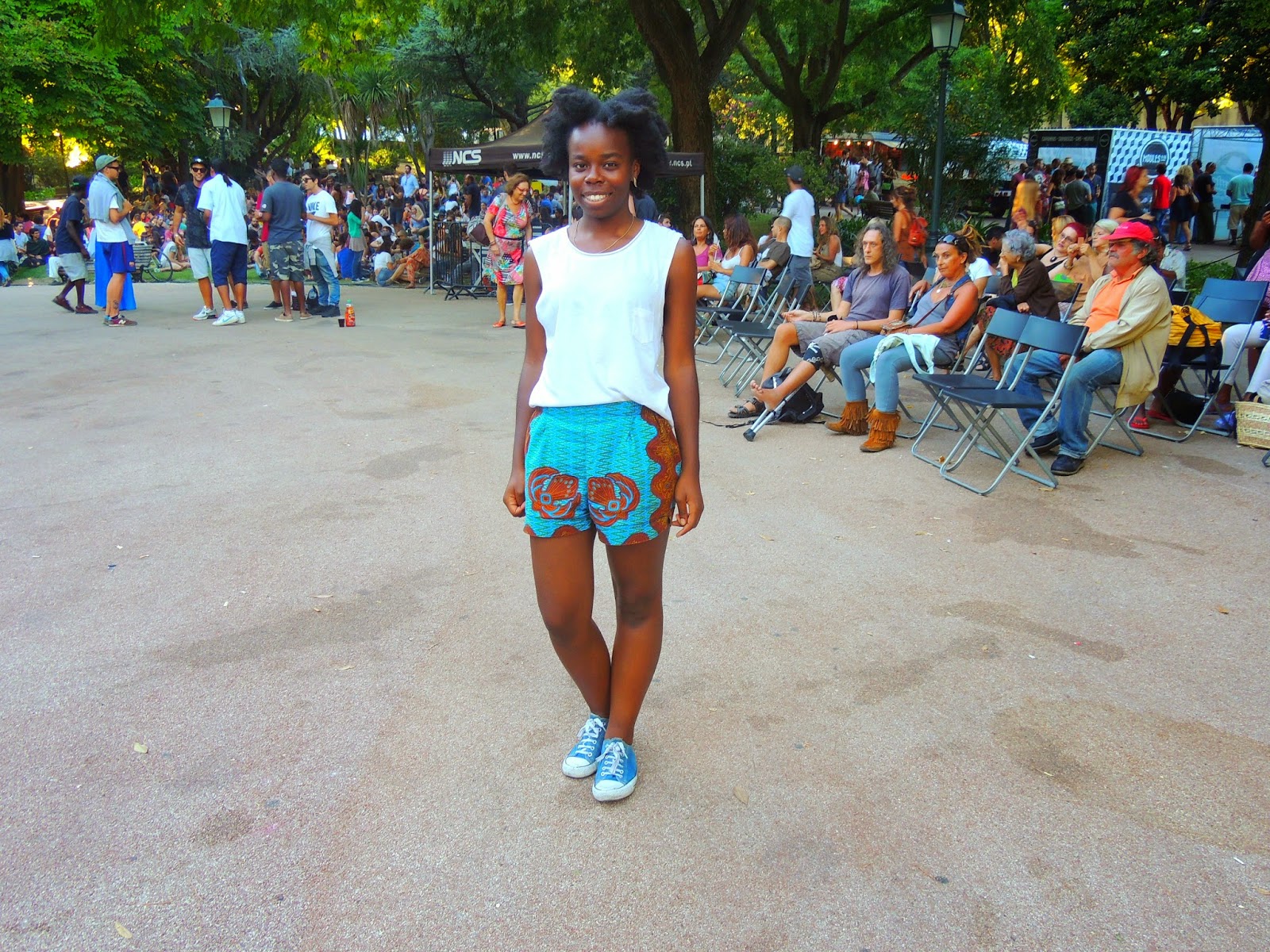
Lisbon For Holidays "semester diary" aug2014

Alfama

Bairro Alto 


Tram 28/ Eletrico 28 Carreira 28 

Sao Jorge Castle / Portas Do Sol

Adamastor 


Estrela Garden/ jardin da Estrela meo Out jazz 

Martin Moniz Mercado de Fusao/ Meo Outjazz


Bairro Alto


Martin Moniz Mercado de Fusao/ Meo Outjazz


Martin Moniz Mercado de Fusao/ Meo Outjazz


 Martin Moniz Mercado de Fusao/ Meo Outjazz

Sé Church/ Igreja Da Sé


Alfama /Teppe Watanabe

Chiado and Alfacinha
Alfacinha is nick name of the person who born in Lisbon.


Sé de Alfama


Jardim Da Estrela / Estrela Garden  / Meo Outjazz


Jardim Da Estrela / Estrela Garden  / Meo Outjazz


 / Feira Da Ladra / Feira Da Ladra Market

Praca do Intendente / with Mano Angelo Torres actor

-------------
Hita Vonana Lissabon august 2014
by
 dumbaenenguebyceleste

Tuesday, 29 July 2014

Berlin fashion Week ss 2015 edition 2014 july , sneak peek

Reebok After Party 

Reebok After Party

Berlin Art 

Swizz Beatz and Reebok Designer at Reebok after party

-----------------
Germany Berlin July 2014

Sunday, 25 May 2014

The New Visual Stories of ‘Africa’/ Fashion Activism


 Media Circus(1991)  |  Mogadishu - Somalia
Photograph by: Paul Lowe/
Panos Photographing an American Marine
 with a malnourished boy during Operation Restore Hope


What is the visual story that needs to be told about Africa? Is there a pictorial strategy that can account for one billion people, living in 53 countries that occupy 12 million square miles, speaking two thousand languages, embodying multiple cultures and numerous ethnicities, with manifold intersections with our globalised world?

Would we even ask that question of the Americas, Asia or Europe? It is unlikely. Others are represented in ways designed to shore up the self and ‘Africa’ is central to the formation of European and North American identity. This process embodies colonial relations of power that distill a complex, hybrid place into visual stereotypes that cast people and their place as superior/inferior, civilized/barbaric, modern/traditional, developed/underdeveloped and so on.


These stereotypes construct both conventional wisdom and its possible alternatives. Others can be reviled for their barbarity or exalted for the closeness to nature, but these options are no more than two sides of the same coin, and each distances ‘us’ from ‘them’. Binyavanga Wainaina’s satirical account of how (not) to represent Africa captures this dual operation, and news coverage often sees ‘Africa’ as a place of either human misery or natural exoticism. ‘Africa’ is therefore a mythic space, the quotation marks signifying its production.

The visual story that needs to be told about ‘Africa’ is not a single story. It is a series of stories assembled to end the idea of a singular 'Africa'. We need accounts of complexity, contrasts, and diversity that are drawn from the everyday as much as the exceptional. We need reports that are aware of their own construction and understand how they either affirm or challenge stereotypes.
There is plenty of photographic work that does that. It is too much to ask of each individual project that it ticks all the boxes, but what projects like African Lens can do is aggregate and curate the rich material being produced so that we can see how, in combination, these images enable stories that complicate the simplistic and deepen the superficial.

How this project is framed will go a long way to determining its success. If we do not go beyond the limits of either/or options we will be stuck replicating colonial dualisms. This means that:

 we need to interpret photographs in terms of the work that they do in relation to stereotypes rather than via an outmoded commitment to ‘objectivity’ and its spouse, ‘subjectivity’. When it comes to reportage we should demand accuracy, but photographs are inescapably representations and never simply mirrors or windows;

 we need to think beyond negative versus positive as the way to categorize images and move toward what Guy Tillim called self-aware, interesting, penetrating, and original pictures;

 we need to exceed the idea that optimism versus pessimism, and especially “Afro-romanticism” versus “Afro-pessimism,” defines the options for stories;

 we need to discard the idea that local versus international makes much sense in the global visual economy; while it is vital indigenous photographers are accorded equal status with their American and European counterparts, we should not assume that “the local” is itself a singular place with just once voice;

 we need to support new developments in the multimedia practice of photography that can literally give subjects a voice for their own stories.

There are many recent photographic projects contributing to this re-visualization of ‘Africa’. Consider Joan Bardeletti’s work on the middle class in Africa alongside Finbarr O’Reilly’s story on white poverty in South Africa. Think of Andrew Esiebo’s portfolio of Lagos nightlife and Ed Kashi’s Niger Delta project, Michael Tsegaye’s pictures of working girls in Addis Ababa, Andrew Tshabangu’s documentation of Johannesburg and Marcus Bleasdale’s presentation of the Kimbangist Symphony Orchestra in Kinshasa to name just a few.

The problem with stereotypes, as Chimamanda Adichie says, is “not that they are untrue but that they are incomplete.” Because of this, the new visual stories of ‘Africa’ cannot ignore the issues of famine, injustice, poverty and war. While we can sympathies with Paul Melcher’s cry for no more “dying Africans,” we must have visual accounts of atrocities when they occur. However, they have to go beyond the stereotypes, as with the Condition Critical project on the Congo war or the coverage of human rights issues in Burundi and Malawi.

These are exciting times for visual storytellers, with the power of the web facilitating the global production and circulation of new photographic projects. There are many challenges involved in getting better stories to the right people, but the gatekeepers of the mainstream media no longer have total control over what we can or cannot see. If we appreciate how stereotypes have been produced and can be contested, we can, over time, achieve the re-visualization of ‘Africa’.


source: africanlens


Monday, 19 May 2014

women style tips according dbc

dumbanenguebyceleste, summer 2014 style tips aka look.
inspiration from colour palettes and forms from safari garments, rice field workers and  retro communist style in shape and cuts.


inspiration, RiceField workers / safari


Safari details inspiration


North Korean

Art Comes First Oversized Cropped Pants

Essential pieces: safari jacket, oversized cropped pants, classic hats 40's men style, Classic brogue or oxford shoes, Avarca Sandals.

colour palette - solid colour: safari brown, black, gray, white, dark brown, yellow mango. blue.
material : leather, line, linen, viscose, 100% cotton.


The Look


dumbanennguebyceleste/ May 014


Saturday, 17 May 2014

smart eyesela


Other day while i was working in fair, a woman approached to me asking,  you look beautiful i like your glasses, where did you bought.
i said to her in "smart eyes", usualy im familiarized in have people that stop me by to give me compliments. 
But this woman that came to me was very funny and different than the majority of times.
She asked me where the shop is located? i said everywhere in sweden, 
in stockholm you have several stores of them. the one where i bought  my frames is located in hötorget near konserthuset.
I'm theirs costumer since i arrived in sweden.
I like the design, doesnt makes you feel that you wear eyewear with type of necessity that i need when use, in way it appears quickly that you have issue sight, you can wear them and you feel cool.
 But how can i find your frames once i'm in the store?
I said to her, normally when i go to choose frames for me, usually i dont like to search in the shelf that has ordinary eyewear frames.
In Smart Eyes, they sale sunglasses too, most of the time the sunglass shelf have great and trendy frames, one thing i like in "smart  eyes" is because you can choose sunglass frame, and they can change put your clinic lense, and is what i always do.
 The woman look at me and said, that's smart from you, smart eyes is like that, was her conclusion


dumbanenguebyceleste //  May 2014